Table of Contents
- What is Spice Blending?
- Historical Roots of Spice Use
- The Art and Science Behind Blending
- Signature Blends Around the Globe
- Modern Day Innovation in Spice Blending
- How Spice Blending Impacts Health and Wellness
- Tips for Creating Your Own Blends
- Resources and Learning More
What is Spice Blending?
Food spice blending is the ancient and continually evolving practice of combining distinct herbs and spices to create signature mixtures that transform not only flavor and aroma but also the cultural identity of dishes. From home kitchens to industrial operations, blending can be as simple as mixing black pepper and salt or as intricate as crafting proprietary blends using an industrial blender for food blending. These blends are treasured worldwide, serving as culinary shortcuts and keystones to regional cuisines.
Whether carefully measured and layered by a chef or efficiently prepared at scale for retail and food services, spice blending brings flavor creativity to home cooks and the food industry. Industrial technology now enables the mass production of consistent and high-quality spice blends, making once-rare culinary experiences accessible to millions.
Historical Roots of Spice Use
The story of spice blending spans thousands of years and dozens of cultures. Cinnamon, pepper, and nutmeg were considered valuable commodities long before modern supermarkets existed. Ancient Egyptians blended aromatic spices to preserve meats and infuse breads, while the Romans and Ottomans developed complex mixtures for feasts and healing remedies. The pursuit of spices shaped global history, igniting vast explorations and international trade. As National Geographic describes, the merchant routes that carried these precious goods also carried stories, influencing food traditions and economies around the world.
Centuries of cultural exchange and adaptation gave rise to the regional blends we cherish today. Blends like berbere from Ethiopia and vadouvan from Southern India represent a marriage of indigenous knowledge and the far reach of the global spice trade. As spice use spread, communities adapted blends according to local palates, available ingredients, and evolving tastes.
The Art and Science Behind Blending
Perfecting a spice blend requires both creative intuition and scientific understanding. The right combination of volatile oils, pungencies, and aromatic compounds can heighten taste, balance flavors, and even alter a dish’s mouthfeel. Traditional cooks often rely on generations of experience to know how spices interact when ground, toasted, or heated. Modern food scientists utilize sensory analysis and chemical profiling to optimize blends for consistency and nutritional benefits.
For instance, spices such as cumin or cardamom pack potent flavors, requiring careful calibration with milder herbs or spices to prevent overpowering a dish. Research published in BBC Future explores how combining certain spices can enhance each ingredient’s properties, resulting in depth and harmony on the palate.
Signature Blends Around the Globe
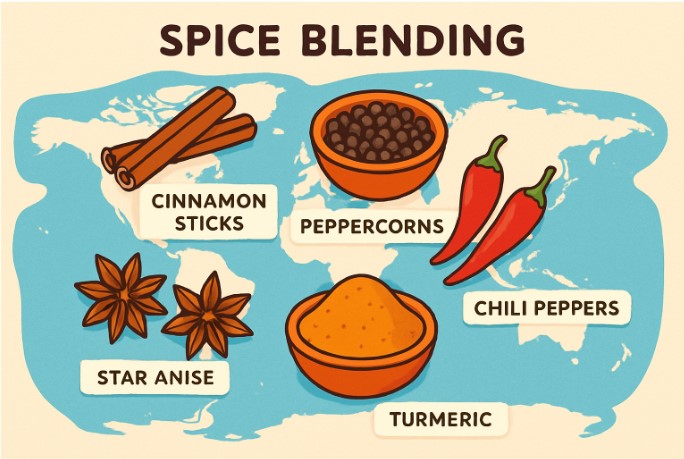
Every corner of the world boasts iconic blends, reflecting unique histories, landscapes, and culinary philosophies. In India, garam masala combines warming spices like cinnamon, cloves, and cardamom for comforting curries. Morocco’s ras el hanout layers dozens of spices—from rose petals to coriander—into intensely fragrant stews. France’s bouquet garni, a bundle of parsley, thyme, and bay leaf, forms the foundation of countless soups and sauces. The American Southwest is rich in chili powder and taco seasoning, while the herbs de Provence of southern France capture the essence of Mediterranean fields.
These blends define national and regional cuisines and showcase how trade, migration, and innovation continue to shape food culture. New hybrids and crossovers are constantly introduced as cooks experiment with unexpected flavor profiles and adapt recipes to local ingredients.
Modern Day Innovation in Spice Blending
Today, the world of spice blending is thriving with innovation and accessibility. Globalization and the digital age allow home cooks to discover and recreate authentic blends from distant cultures, fostering culinary curiosity. Food producers are responding to health-conscious consumers by incorporating functional spices such as turmeric and ginger—known for their anti-inflammatory benefits—into new convenience products.
The market is also seeing the rise of personalized blends, as more people seek to adapt flavors to dietary needs and unique palates. According to the Specialty Food Association, the global palate has never been broader, with creative mixtures continually appearing on store shelves and restaurant menus. This innovation ensures that spice blending continues to be a dynamic force in shaping how we cook and eat.
How Spice Blending Impacts Health and Wellness
Beyond tantalizing taste buds, spice blends can offer meaningful health advantages. Ingredients like turmeric and black pepper synergize to boost absorption of anti-inflammatory compounds, while cinnamon and clove demonstrate properties that assist with blood sugar regulation. Chili peppers and black pepper are associated with metabolism support and enhanced satiety, underlining that spice blends provide more than just sensory enjoyment. Scientific research, such as numerous articles from Healthline, highlights the diverse benefits of regularly including blended spices in your diet.
Tips for Creating Your Own Blends
Bringing spice blending into your own kitchen is both satisfying and empowering. Start with small batches until you find balanced ratios that match your preferences. Keep detailed notes to track which combinations resonate. Toasting whole spices before grinding releases deeper flavors and aromas. Once blended, store your creations tightly sealed in a cool, dark space to maintain potency and freshness.
- Start with a small batch so you can adjust ratios without much waste.
- Keep a notebook nearby to jot down what you mixed and the outcome.
- Toast whole spices before grinding to unlock more decadent flavors.
- Store finished blends in airtight containers away from heat and light.
Experimenting with new blends is an adventure in flavor, history, and cultural discovery. Over time, you’ll develop personalized blends that add distinction to your everyday meals.
Resources and Learning More
Explore the world of spices further by diving into books, trusted cooking sites, and global food forums. Resources like The New York Times Essential Spice Guide offer in-depth insights, while community groups and cooking classes can help hone your craft. Learning about global blends transforms ordinary meals into memorable experiences, celebrating tradition and innovation from kitchens worldwide.